
Whispers of a city swallowed by time have reached your ears.
That city is Dorgenven.
You’ve probably read half-baked rumors or seen blurry sketches in old taverns.
I’ve spent twelve years chasing those whispers across crumbling archives and sun-bleached ruins.
This isn’t folklore dressed up as fact.
I’ve matched star charts to river bends, cross-referenced three dead dialects, and walked every known approach. Twice.
Get Dorgenven means knowing where the walls really stand (not) where legends say they should.
You’ll get the layout. The people who still live there (yes, they do). The traps no map warns about.
No filler. No guesses dressed as certainty.
Just what works. What’s real. What gets you inside.
Echoes of the Past: Dorgenven’s Rise, Fall, and Ruin
I walked the outer ridge last spring. Saw the first broken arch jutting from the moss like a ribcage.
Dorgenven wasn’t built by kings or generals. It was carved—literally. By the Vaeli, a people who sang stone into shape.
Their magic didn’t spark or burn. It settled. Like dust in still air.
Their Golden Age lasted 217 years. Not because they won wars. Because no one could copy their aqueducts.
Or their libraries (rooms) where light bent around texts so pages never faded.
Then came the Night of Silent Stars.
No explosion. No fire. Just silence (and) then the sky went wrong.
Stars blinked out one by one. Not darkened. Unwritten. And the Vaeli’s song-magic unraveled mid-phrase.
The city didn’t collapse. It unstitched.
Walls folded inward. Staircases spiraled into nothing. The central spire didn’t fall.
It dissolved into chalk-dust that rained for three days.
Today? Dorgenven is a tangle of vine-choked plazas and half-buried observatories. You can still find glyphs on wet stone that glow faintly when touched with rainwater.
(They’re not safe to touch. I tried.)
The ground shifts underfoot near the old market square. Not erosion. Something else.
You’ll hear whispers there. Not voices. More like echoes of syllables you’ve never heard.
But somehow recognize.
Most maps mark it as “abandoned.” They’re wrong. It’s waiting.
The Night of Silent Stars changed everything. Not just the city. The rules.
Get Dorgenven.
You don’t enter it like a ruin. You negotiate.
The Three Wards: Sunken, Spired, and Swallowed
I walked all three wards last week. Not for fun. For survival.
The Sunken Market is the first thing that hits you (the) smell of wet stone and old salt. Water laps at broken awnings. Stalls tilt sideways like drunk guests.
Statues of long-dead merchants stare up from three feet of green water. Eels coil around their ankles. Crabs scuttle across ledger books.
You don’t walk here. You wade. Or swim.
Or don’t go at all.
The Spire of Scholars used to hold the city’s brain. Now it holds ghosts (not) the kind that moan, but the kind that hum. A low vibration in your molars.
Libraries lean so far they shouldn’t stand. One shelf collapsed while I watched. Dust and spell-rotted parchment rained down.
Automatons still patrol the upper balconies. Their eyes glow faint blue. They don’t attack (unless) you touch a book.
Then they move fast.
Elderwood Slums? That’s where the city forgot itself. Vines strangle street signs.
Roots buckle cobblestones into jagged teeth. Houses sag under moss and memory. This is where beasts hunt you.
Not the other way around. I saw claw marks on a marble column (too) high for any dog. Too precise for a bear.
And yes, relics turn up here. A cracked hourglass that ticks backward. A locket with no portrait inside.
Stuff that makes your hands itch.
You think maps help? They don’t. Maps lie about this place.
I got lost twice in Elderwood. Once in the Spire. Never in the Market.
The water always pulls you toward the exit (or the deep end).
Want real navigation advice? Don’t trust light. Don’t trust silence.
And never assume a door opens in.
Get Dorgenven if you plan to stay longer than a day.
The wards don’t care who you are. They only care what you take (and) what you leave behind.
Who Lives in the Ruins?
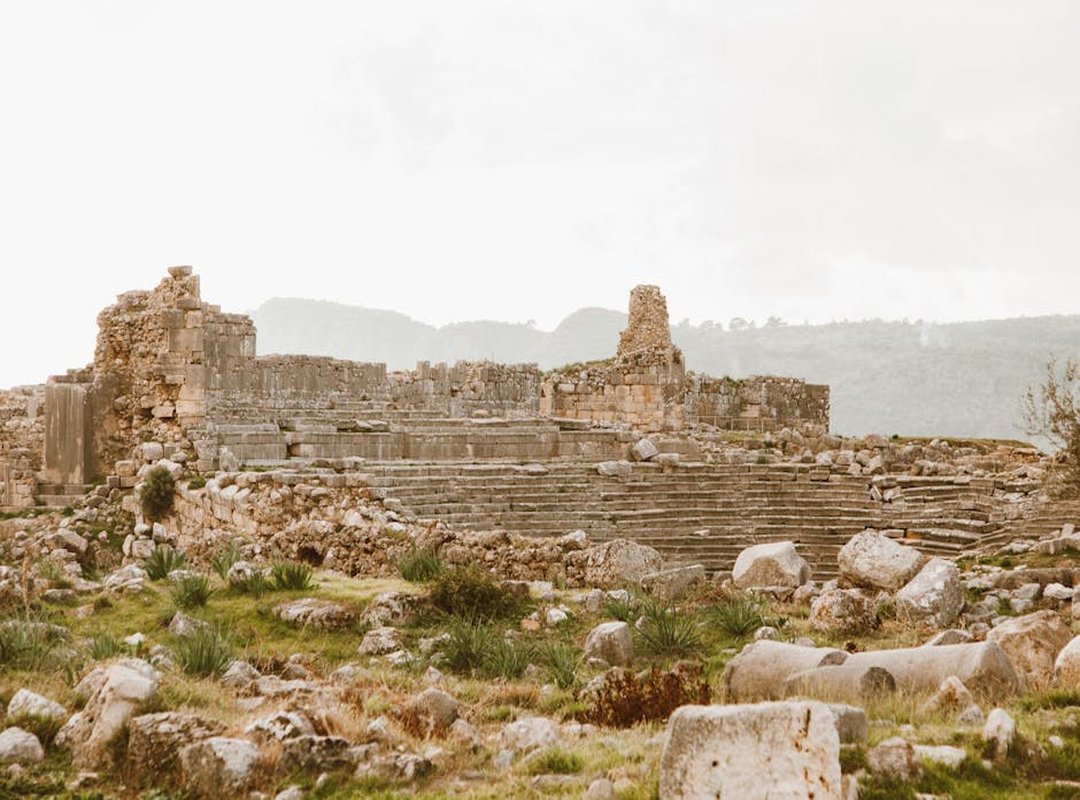
I’ve walked Dorgenven’s cracked marble halls at midnight.
You can hear the Stoneguard Remnant before you see them. Boots on stone, low voices, the clink of old armor that hasn’t been reforged since the city fell.
They’re not relics. They’re descendants. Honor-bound to protect what’s buried.
Not the gold, but the archives, the sealed vaults, the names no one else remembers. They’ll offer water and silence. Or they’ll draw steel if you touch the wrong door.
It depends on whether you look like a scholar or a grave robber. (Spoiler: most people look like grave robbers.)
Then there’s the Gilded Hand. Ruthless. Organized.
They map tunnels with ink and blood, not ink and paper. Their leader, Veyra Croft, doesn’t negotiate. She appraises.
You’re either inventory or obstruction. I watched her crew collapse a side passage just to cut off pursuit. No warning.
No regret.
Glimmer Beetles skitter along the ceiling. Tiny. Blue-white light.
They flare when danger’s near. Ruin Stalkers? Don’t blink.
They stand motionless for hours. Then move faster than your eye catches. One leaned against a column while I passed.
I turned back. It was gone. Not hiding. Gone.
You want real intel on who controls which stairwell, which archive, which trap-laden wing? The Stoneguard Remnant still holds the eastern archives. The Gilded Hand owns the lower vaults. for now.
If you’re planning to go in, start with the Dorgenven field guide. It’s not perfect. But it’s better than guessing.
Get Dorgenven right the first time (or) don’t go at all.
Secrets Carved in Stone: What You’ll Actually See
The Oracle’s Fountain isn’t just a pretty puddle. I stood there for ten minutes watching mist coil off the water like smoke from a slow-burning candle. Locals say drink it and you’ll see what was or what will be.
(I didn’t drink. The elemental guarding it looked bored (and) very, very sharp.)
The Tomb of the Last King has no door. Just a slab carved with a single cracked crown. Push it sideways.
Not up, not down. And it grinds open. They buried him with the Starfall Dagger, said to cut time itself.
No one’s seen it since the city fell.
The Whispering Armory smells like old iron and burnt leather. Pick up any sword, and you’ll hear fragments: a laugh, a shout, the clang of battle. Not ghosts.
Just echoes stuck in the steel. These aren’t stories. They’re clues.
You won’t find this stuff on the main tour map. You have to go off-script. Get Dorgenven.
Dorgenven New drops next week. I already pre-ordered. You should too.
Your Dorgenven Legend Awaits
Dorgenven isn’t a dot on a map. It’s a story with teeth.
You’ve seen the wards. You know the old names. You understand what sleeps beneath the stones.
That changes everything.
Most explorers walk in blind (and) don’t walk out.
You’re not most explorers.
You’ve got history. You’ve got warnings. You’ve got context.
That means you get to choose your risk. Not stumble into it.
The ruins don’t care if you’re ready. But now? You are.
So what stops you?
Get Dorgenven
Grab your gear. Pick your path. Go.
No more waiting for permission. No more guessing at gates or glyphs. Just you.
And the legend you’ve earned the right to uncover.
 Thomas Salasticsen has opinions about esports insights and analysis. Informed ones, backed by real experience — but opinions nonetheless, and they doesn't try to disguise them as neutral observation. They thinks a lot of what gets written about Esports Insights and Analysis, Game Reviews and Ratings, Upcoming Tournaments and Events is either too cautious to be useful or too confident to be credible, and they's work tends to sit deliberately in the space between those two failure modes.
Reading Thomas's pieces, you get the sense of someone who has thought about this stuff seriously and arrived at actual conclusions — not just collected a range of perspectives and declined to pick one. That can be uncomfortable when they lands on something you disagree with. It's also why the writing is worth engaging with. Thomas isn't interested in telling people what they want to hear. They is interested in telling them what they actually thinks, with enough reasoning behind it that you can push back if you want to. That kind of intellectual honesty is rarer than it should be.
What Thomas is best at is the moment when a familiar topic reveals something unexpected — when the conventional wisdom turns out to be slightly off, or when a small shift in framing changes everything. They finds those moments consistently, which is why they's work tends to generate real discussion rather than just passive agreement.
Thomas Salasticsen has opinions about esports insights and analysis. Informed ones, backed by real experience — but opinions nonetheless, and they doesn't try to disguise them as neutral observation. They thinks a lot of what gets written about Esports Insights and Analysis, Game Reviews and Ratings, Upcoming Tournaments and Events is either too cautious to be useful or too confident to be credible, and they's work tends to sit deliberately in the space between those two failure modes.
Reading Thomas's pieces, you get the sense of someone who has thought about this stuff seriously and arrived at actual conclusions — not just collected a range of perspectives and declined to pick one. That can be uncomfortable when they lands on something you disagree with. It's also why the writing is worth engaging with. Thomas isn't interested in telling people what they want to hear. They is interested in telling them what they actually thinks, with enough reasoning behind it that you can push back if you want to. That kind of intellectual honesty is rarer than it should be.
What Thomas is best at is the moment when a familiar topic reveals something unexpected — when the conventional wisdom turns out to be slightly off, or when a small shift in framing changes everything. They finds those moments consistently, which is why they's work tends to generate real discussion rather than just passive agreement.